
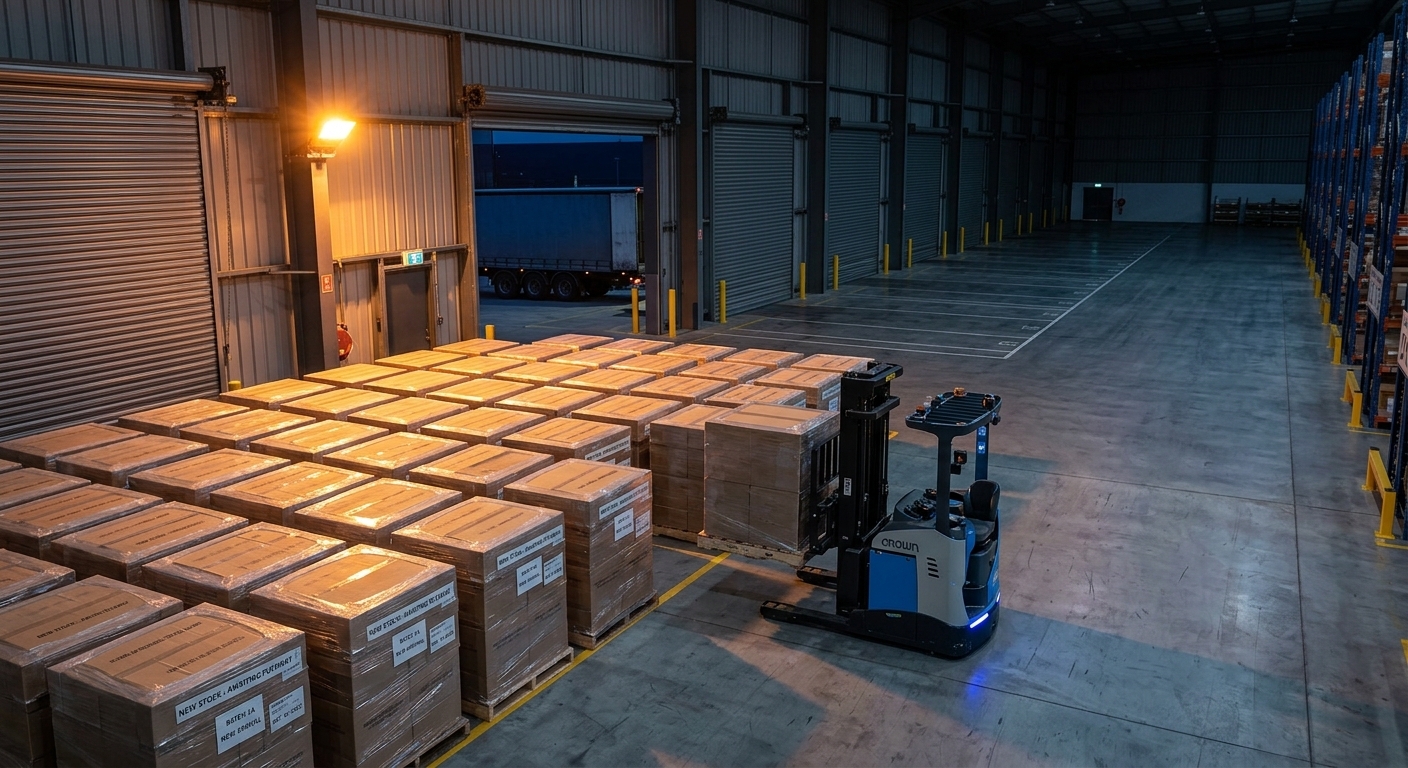
There is a particular kind of automation disappointment that has nothing to do with the robots. The machines arrive, they are commissioned, they work exactly as specified, and six weeks later throughput is barely different from before.
What happened is usually simple. The floor found a way to work around them.
Pickers walk instead of waiting for the robot. Supervisors override the system because they trust the paper list. Somebody keeps a spreadsheet. None of it is sabotage, and most of it comes from people trying to do their job well with a tool they were never properly handed. But it is the reason a technically successful deployment can produce a commercially disappointing result, and it is the part of automation that almost nobody plans for.
The short answer
- Resistance is usually rational. Teams work around automation when the workaround is genuinely faster for them, or when nobody explained what the machine is for. Both are fixable, and neither is an attitude problem.
- The job changes rather than disappears. On an automated floor, warehouse work moves from walking and picking toward zone working, exception handling and quality checking. That is a different job description, not a smaller one.
- Training should be measured in minutes, not days. If your automation needs a week of classroom time per person, it will not survive a peak intake of temporary staff.
- Seasonal staff are the hardest test and the biggest prize. Whatever you have built either works for somebody on their second day or it does not work at peak.
- Measure adoption, not attendance. Override rates and manual workarounds tell you more than any training completion report.
Why do warehouse teams work around new automation?
Three reasons, in descending order of how often they are the real cause.
The workaround is actually faster for that person. If a picker waits ninety seconds for a robot that could have been avoided by walking twenty metres, walking is the correct decision from where they are standing. The person is optimising their own task; the system is supposed to be optimising the floor. When those two disagree consistently, the coordination is wrong and the behaviour is a symptom.
Nobody said what it is for. Automation that is introduced as efficiency, with no explanation of what changes for the person doing the work, gets read as a threat. That reading is not paranoid, it is the obvious inference from the word efficiency. It costs nothing to be specific instead: this machine does the walking, you do the picking and the judgement calls, here is what your shift looks like on Monday.
It failed once and nobody fixed it. A robot that stalled and sat there for twenty minutes during a busy shift teaches a lasting lesson. If exceptions are not resolved quickly and visibly, the floor learns that the system cannot be relied on, and it builds a manual fallback that then never goes away. Our piece on real-time exception handling covers why that recovery speed matters more than the failure rate.
What does the job actually become?
On a well-coordinated automated floor, the shape of warehouse work changes in four ways:
- Travel goes away. The machines move; people stay in a zone. This is the single largest change, and for most staff it is a genuine improvement rather than a talking point.
- The work arrives already sequenced. Instead of holding a list and deciding the route, the person handles what is presented next. Less decision load, more consistency.
- Judgement moves up. Damaged stock, a mismatch, an unusual order, an awkward item. The things a robot cannot resolve are now the higher-value part of the role.
- Supervision becomes monitoring. Team leaders spend less time chasing and allocating and more time watching where the floor is behind and why.
Worth being straight about the parts that are less comfortable: the work is more paced, it is more measured, and some people prefer the autonomy of walking a list. Pretending otherwise during the rollout is what damages trust. Saying it plainly, and being clear that the physical load drops substantially, tends to land better than a presentation about the future of work.
How long should training take?
Short enough that a temporary worker is productive on their first shift, because that is the constraint that actually matters.
This is a design test, not a training test. If a system needs extended instruction before someone can use it, it is asking the person to hold information the software should be holding. The floor-level test is simple: can a new starter be shown the station, told what the screen is asking for, and be working within the hour, with somebody nearby for the first day.
Where automation reduces training time, it does so by removing the parts of the job that used to require site knowledge. Learning a building, memorising where fast movers live, and knowing which aisle to route through in what order are all things a new picker used to need weeks to absorb. A directed, zone-based workflow removes most of it.
Two things are worth building into the rollout regardless. Train supervisors properly rather than everyone lightly, because the supervisor is who the floor actually asks. And train the failure cases, not the happy path, since the day a new starter loses confidence is the day something goes wrong and nobody told them what to do.
How do you onboard seasonal staff onto an automated floor?
Treat the peak intake as the thing the whole design has to survive, not an edge case.
A 3PL taking on a large temporary intake for October and November has no time for a training programme, no time for site familiarity to build, and no tolerance for a productivity curve that takes three weeks to flatten. Whatever is in place either works for someone on day two or it does not work when you need it.
Four things help:
- Bring the intake in before the volume, not with it. A fortnight of ordinary shifts on the automated floor is worth more than any induction session, and it costs less than the same learning happening in December.
- Keep the permanent team on the exceptions. Put experienced staff where judgement is needed and new starters on the directed stations, rather than distributing everyone evenly.
- Do not let peak be the first time the floor runs at full allocation. If the coordination rules change for peak, they should change in October so the team sees them at a survivable volume. Our peak readiness guide sets out the wider sequence.
- Make the escalation route obvious. A new starter who does not know what to do when something jams will either stand still or improvise, and both are expensive.
What does supervision look like when robots do the travel?
It becomes a floor-management job rather than a chasing job, and that change needs supporting explicitly or supervisors will quietly keep chasing.
The useful reframing is that a supervisor on a coordinated floor is watching for the exception: the zone falling behind, the station with a queue building, the machine that has stopped contributing. The allocation decisions that used to occupy most of the role are being made continuously by the coordination layer, which is why running robots without an in-house robotics team is a realistic proposition rather than a claim.
What supervisors need in order to do that is visibility. If the only way to know the floor is behind is to walk it, they will walk it, and you have paid for coordination and kept the old operating model. Our guide to the KPIs worth tracking once robots are running covers what should be on that screen.
How do you tell whether adoption is actually working?
Look at behaviour rather than at training records. Four signals:
- Override and manual-bypass rate. How often the system is being told to stand aside. A stable high number is not an adoption problem, it is a coordination problem with an adoption symptom.
- Shadow processes. Spreadsheets, paper lists, a whiteboard by the packing bench. Each one marks a place the system is not trusted, and each one is worth asking about rather than removing.
- Time to productive for a new starter. If this is not improving on an automated floor, the workflow is carrying complexity it should have absorbed.
- Pick accuracy by shift and by zone. Coordinated, directed work tends to reduce errors by up to 90%, so a zone well below that pattern is usually telling you something about how the work is being done there.
What this looks like in practice
Coordinating an existing fleet tends to produce throughput uplift of 20 to 40%, error reduction of up to 90% and labour cost reduction of up to 70%, with return on investment in 4 to 12 months. Those are ranges, and the floor's willingness to work with the system rather than around it is a large part of where a site lands inside them.
A coordination layer sits between your warehouse management system and the robot controllers, works across 100+ robot models from different suppliers, and needs no internal robotics team. If your robots are working and your throughput is not, book a technical demo and we will look at where the floor is routing around them.